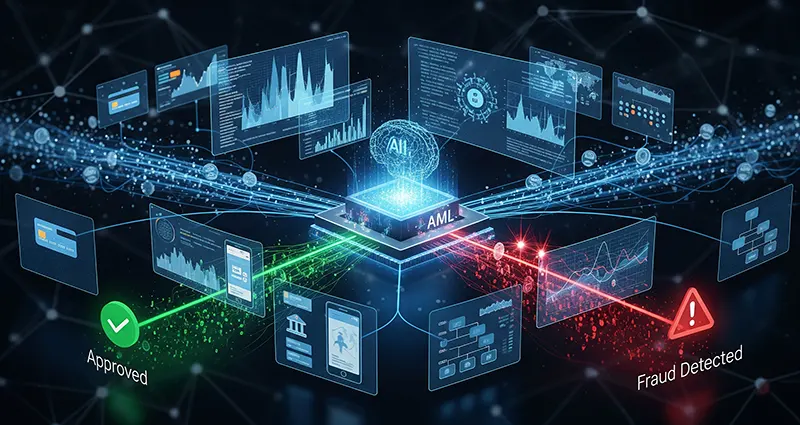
A New Guardian in the Digital Age: Using AI and Machine Learning for Real-Time Fraud Detection in FinTech

The rapid ascent of the FinTech industry—with its emphasis on speed, convenience, and accessibility—has brought about a parallel rise in the sophistication and volume of financial fraud. Traditional rule-based fraud detection systems, which rely on a set of static, predefined rules, are increasingly unable to keep pace with the dynamic and evolving tactics of fraudsters. In this high-stakes environment, artificial intelligence (AI) and machine learning (ML) have emerged as the new front-line defense, revolutionizing the way FinTech companies and financial institutions protect themselves and their customers.

The Limitations of Traditional Systems

Traditional fraud detection typically operates on a simple principle: if a transaction meets a set of pre-programmed rules (e.g., “flag any transaction over $5,000” or “block any transaction originating from an unusual country”), it is flagged for review. While this approach can be effective for simple, well-known fraud patterns, it has significant drawbacks:

  • High False Positives: Rigid rules often
READ MORE ...
The Pros and Cons of Long-Term vs. Short-Term Fixed Deposits

Fixed deposits (FDs) have been a cornerstone of financial planning for Indian investors, offering a safe and reliable way to grow money. With guaranteed returns and flexible tenures, FDs cater to a variety of financial needs, from building an emergency fund to planning for retirement. However, one crucial decision when investing in FDs is choosing between long-term and short-term deposits. Each option has its own advantages and disadvantages, depending on your financial goals, risk appetite, and liquidity needs. Tools like an FD rate calculator can help you compare returns and make informed decisions. This article explores the pros and cons of long-term versus short-term FDs, offering insights to help you choose the right option.

What are fixed deposits?

Fixed deposits are investment instruments where you deposit a lump sum with a bank or financial institution for a fixed tenure. In return, you earn a fixed interest rate, which remains unaffected … READ MORE ...

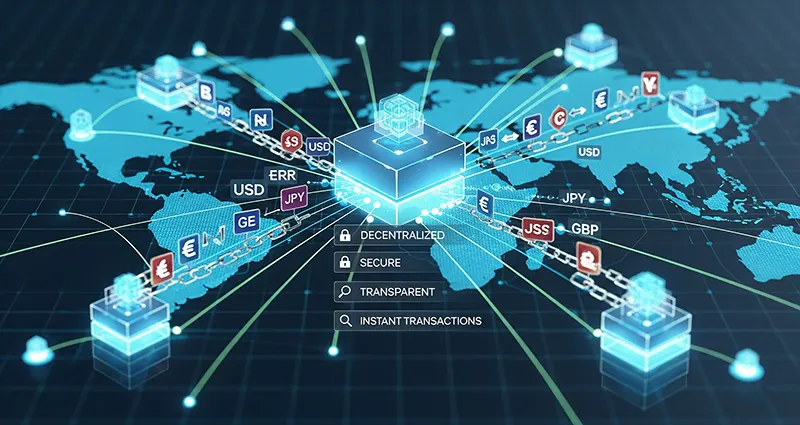
Revolutionizing Remittances: How Blockchain Technology Impacts Cross-Border Peer-to-Peer Payments

Cross-border peer-to-peer (P2P) payments, often synonymous with remittances, have long been a cornerstone of global economies, enabling individuals to send money to family and friends across international borders. However, this vital process has historically been plagued by inefficiencies: high transaction fees, slow processing times, opaque exchange rates, and a lack of accessibility for unbanked populations. Enter blockchain technology, a disruptive force poised to fundamentally transform how cross-border P2P payments are conducted.

Blockchain, the decentralized and immutable ledger system famously underpinning cryptocurrencies like Bitcoin, offers a compelling solution to many of the long-standing challenges in the remittance landscape. Its inherent characteristics directly address the pain points of traditional money transfer systems, paving the way for a more efficient, equitable, and accessible future for global payments.

The Traditional Landscape: A Web of Intermediaries

Before delving into blockchain’s impact, it’s crucial to understand the traditional remittance ecosystem. When an individual sends money internationally … READ MORE ...

The Benefits of Dollar-Cost Averaging with ETFs: A Strategy for Singaporean Investors

Investing in the financial markets can be a daunting task for both seasoned and novice investors, especially in a volatile environment. However, there are strategies designed to simplify the process and reduce the emotional impact of market fluctuations. One such strategy is Dollar-Cost Averaging (DCA), and when paired with Exchange-Traded Funds (ETFs), it can provide Singaporean investors with a powerful tool for building wealth over time.

Why ETFs are Ideal for DCA

ETFs are investment funds that hold a collection of assets, such as stocks, bonds, or commodities. These funds are traded on stock exchanges, just like individual stocks, and offer a diversified portfolio with relatively low costs. ETFs are an ideal vehicle for implementing DCA due to their diversification, liquidity, flexibility, and cost-effectiveness.

Diversification with ETFs

One of the key advantages of investing in ETFs is diversification. By investing in an ETF, you are automatically gaining exposure to … READ MORE ...

Understanding Business Life Cover: What You Need to Know

In the dynamic world of business, safeguarding your company against unforeseen events is important. One safeguard is business life cover, an often overlooked yet essential component of a robust business continuity plan. This insurance policy is designed to protect your business in the event of the death or critical illness of key personnel. Here’s a comprehensive guide to understanding Business Life Cover and why it might be the safety net your business needs.

What is Business Life Cover?

Business Life Cover, also known as business life insurance, is a policy that provides financial support to a company if a key employee, director, or business owner dies or is diagnosed with a terminal or critical illness. This type of insurance can help cover various costs such as replacing the key person, paying off debts, compensating for lost profits, or even buying out a deceased partner’s shares. 

Types of Business Life Cover

READ MORE ...